Threshold
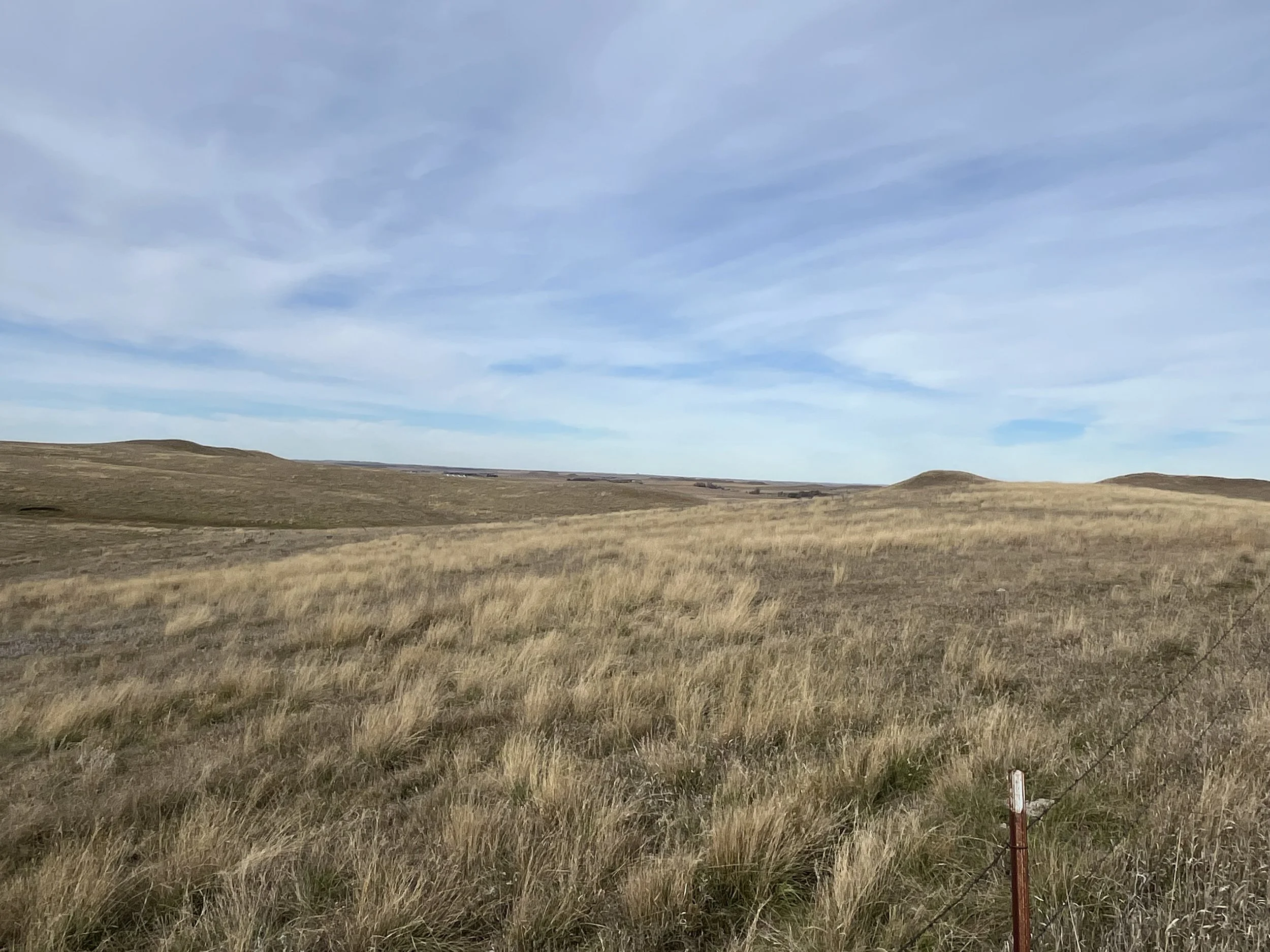
North Dakota rangeland and barbed wire
Poetry
Here’s Yehuda Amichai’s “The Place Where We Are Right”
Journeying
When I saw the cut metal sign for the cemetery, I swung a hard right onto the dirt road. An arrow pointed me left and up a steep hill. A quarter mile further, the road ended in rangeland. I parked in front of the graveyard, climbed out into the wind, and slipped through an open gate. Hills sheltered the plots on two sides. Someone who knew well the tenacity of wind had thought to lodge their relatives up against the back wall of an otherwise drafty house. The rest followed suit. I’d worn my wool hat and extra flannel shirt. Now, I shoved my hands into my jean pockets and hiked across the hillocks to the cemetery’s far side.
I had come to the tiny town nearby in southwestern North Dakota because my friend has a house here and because big land and sky make me feel like every cell, nerve, muscle, and vessel in my body is shimmering with expansion. But after nearly a week, I didn’t feel rapture. I felt confined. I could look, but not touch, the landscape because most of it around here was privately owned. I’d followed the sign for the cemetery as a last-ditch effort to escape into the vastness.
I’d thought about driving to a state park in Bismarck, an hour away, to hike and run trails. I’d also considered taking my chances at a couple of closer public access areas. But it was hunting season. Driving up from Omaha, I’d car camped at a small state park in central South Dakota. All the other occupants were men dressed in camo and orange. On my way to the grocery the day before, I’d had to slam on my brakes to avoid hitting three whitetails, their caramel-colored coats turned winter dun, as they bounced across the two-lane road. I had scared up three groups of pheasants in a similar way.
The cemetery offered a last chance at access amidst the dangerous and deeded. I took it. Someone had left a wheelbarrow full of dirt, a shovel, and a five-gallon bucket near one of the headstones. I assumed he or she was landscaping rather than digging another grave. The cemetery’s occupants included a twelve-year-old boy who had died five years ago. His gravestone bore an engraving of him on a motorcycle. Whirligigs and solar-powered garden lights decorated the ground in front of the stone, like his family didn’t want to leave him lying out here alone under the infinite night sky. On the other side of the cemetery, I found a weathered white gravestone, a lamb carved on top. The unnamed infant lived for a day in 1896. No pinwheels or lights here.
A five-foot chain link fence surrounded the cemetery. The wind, no respecter of boundaries, tore through the fence and me. When I reached one corner of the cemetery, I took a picture over the fence then decided it was time to leave. I made my way back to the car, the town and my friend’s house.
The next morning, on my way back to Omaha, I drove south into Standing Rock Indian Reservation. Here, there were fewer fences and gates, like the landscape had been let loose. I had given up trying to alleviate the tension I felt. But when the car crested a rise and dropped into a wide valley, hemmed on all sides, not by barbed wire but buttes, I began to cry. I sobbed through the valley and several miles south, until I reached the only gas station I’d seen since I’d left Bismarck five days prior. I pumped gas behind sunglasses, the wind whipping my hair and drying my tears.
For the past week, I had felt paused on the threshold of a house I couldn’t enter. I thought I had lost the broad landscapes, but as it turned out, I just needed to drive twenty miles south onto the reservation, out of the owned and into the stewarded and ancestral, to feel belonging again. To a land that has always reminded me that my smallness holds an inexplicable vastness. I climbed back into the car, the wide emptiness pulsing inside me, and pointed myself toward home.
Gardening and Making/Mending
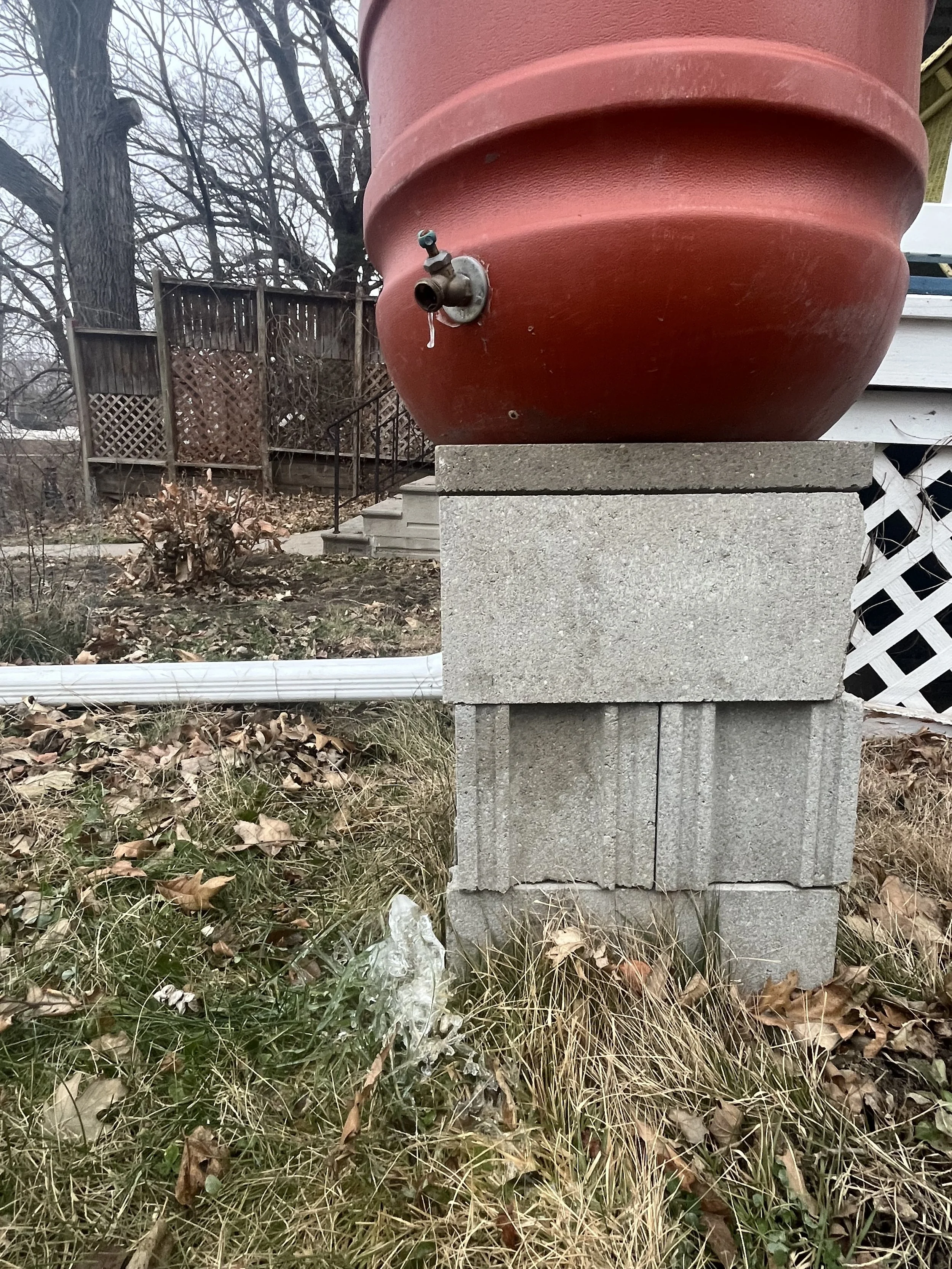
Well, folks, gardening has come to a screeching halt. Winter arrived abruptly, as it often does here, with temperatures in the teens and snow. My neighbor, who collects the leaves in his yard for me each year, left bags of them in my backyard for me to spread on the garden beds. Now they are covered in snow. The rain barrels that I normally detach and drain each year are still tethered to the gutters, the spouts dripping icicles. The barrels may not make it into the shed this year, but once the snow melts, I will empty the leaves from their sodden bags and give the plants a final tuck in.
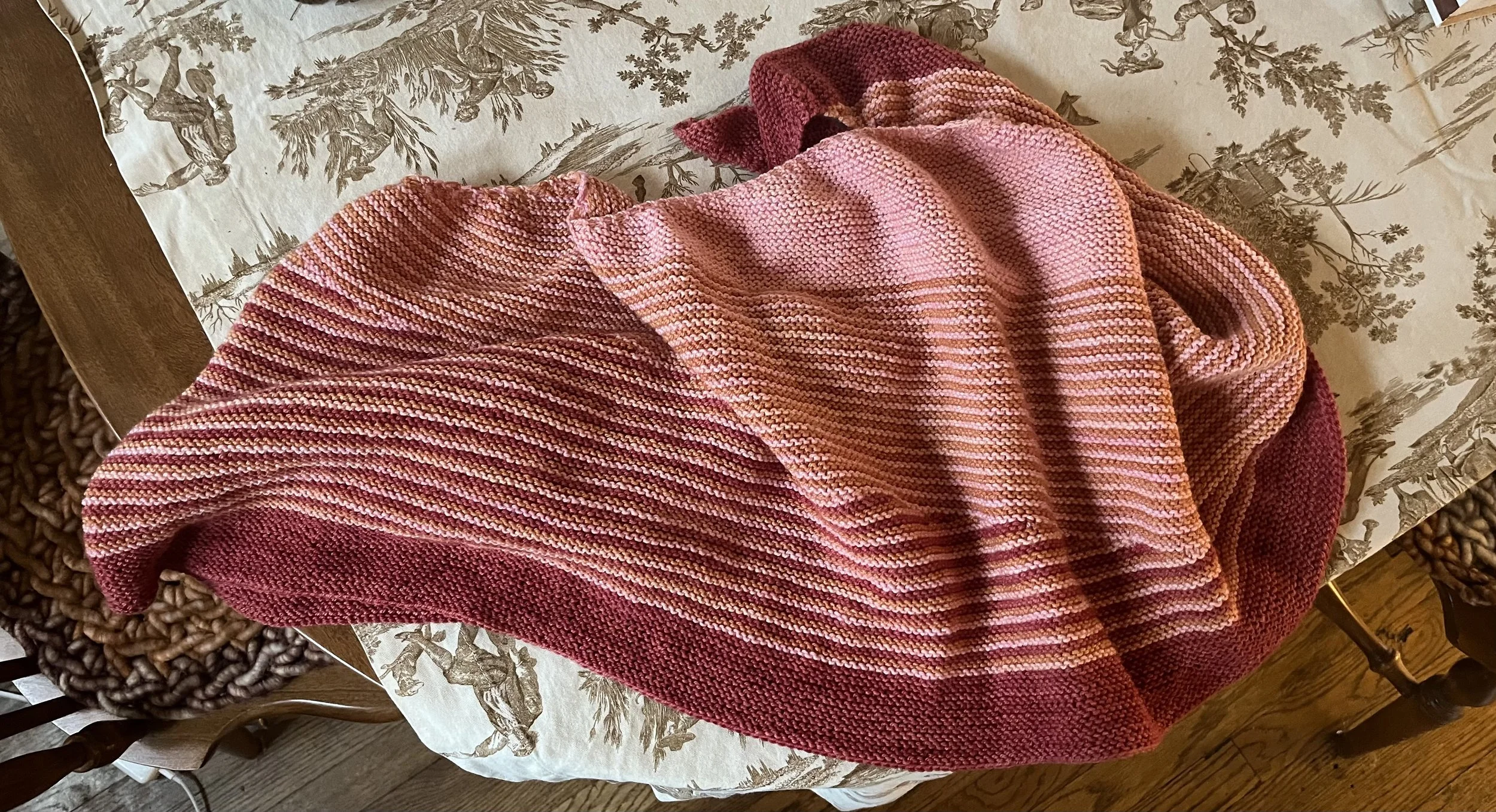
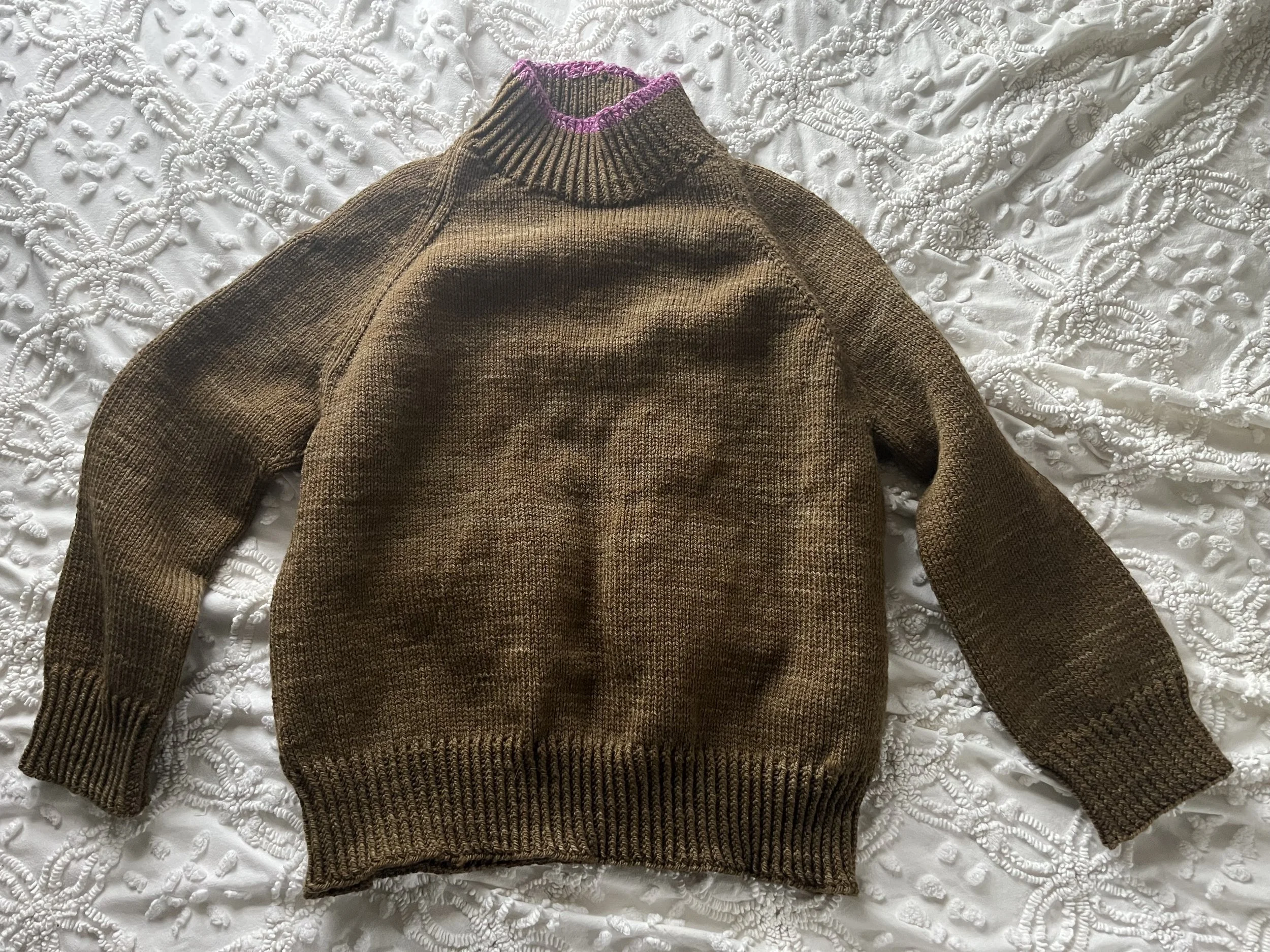
Scarf and sweater, both unblocked* and, thus, a little wrinkly and wobbly.
Nothing is happening in the garden, but everything is happening on the needles, or rather off them, because I have finished two projects in the last week, a shawl that I’ve had going for at least a year and the sweater you’ve witnessed the progress on here. Now, what do I knit next?
* “Blocking is a simple but vital step which will greatly improve the look of even the most beginner knitting. If you have made the effort to hand-knit something, it deserves to be blocked.” (From Coco Knits)